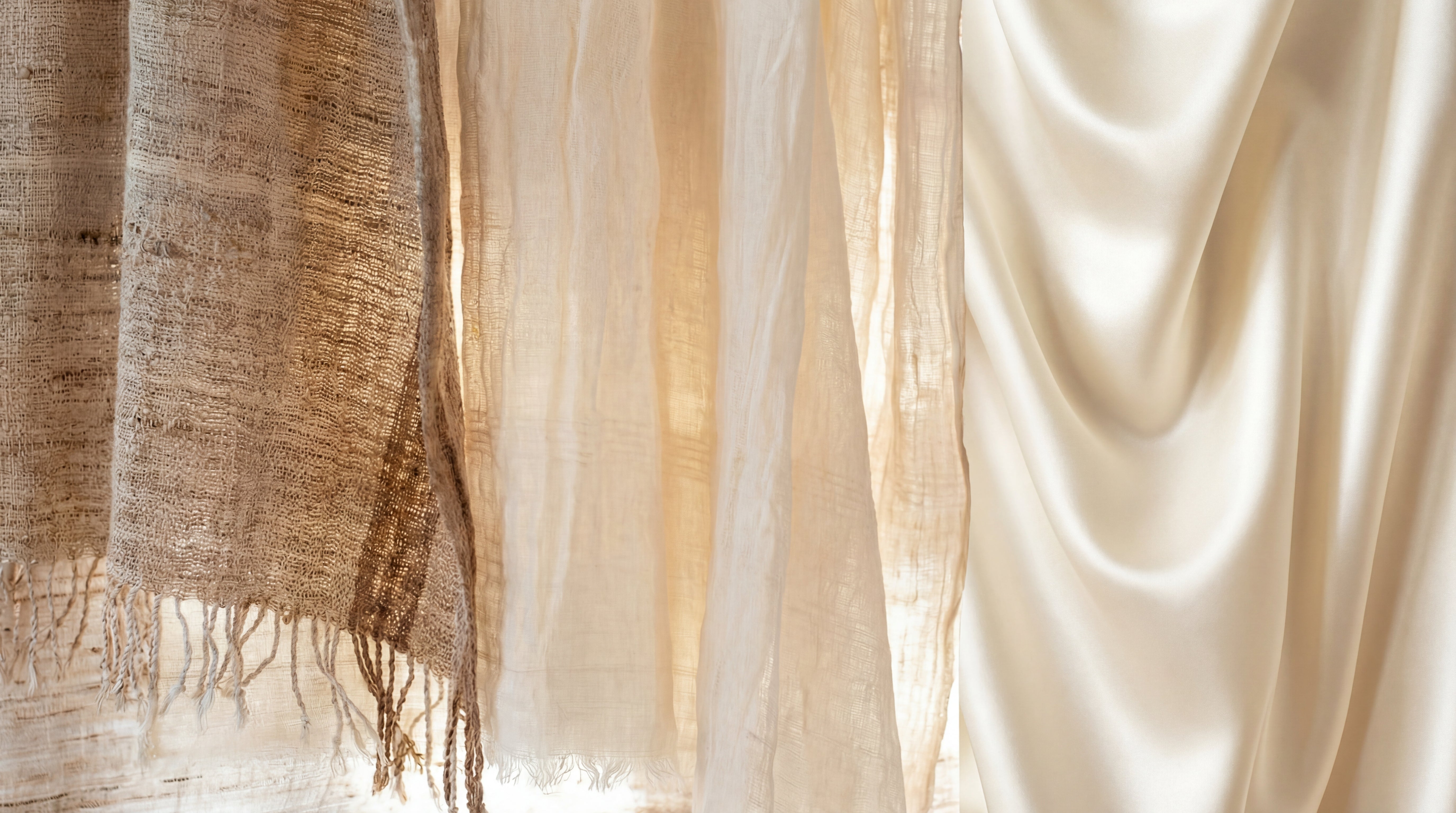
Cotton, Linen, Silk: A Quick Comparison
What we choose to sleep between is, perhaps, one of the most intimate decisions we make. It is a choice made in the quiet hours, felt against the skin when the world falls away. Cotton, linen, silk - each offers a distinct conversation with the body. To understand them is to curate not just a bed, but a state of rest.

The Character of Each Fibre
Cotton is the familiar companion. Its fibres are soft, welcoming, and breathable. There is a reason it has dressed our beds for generations. Yet, cotton is also absorbent by nature. In the still of a warm night, it can hold onto moisture, its gentle grip becoming a slight, clinging weight. It is the friend who means well but may, at times, overstay their warmth.
Linen, born from the flax plant, possesses a different honesty. It arrives with a wholesome, textured crispness, what some might call a rustic charm. But this is not stiffness; it is promise. With each use, linen yields, softening and conforming, its hollow fibers allowing air to move freely. It is the choice for those who prefer their bed to breathe as openly as a summer field. A scientific review even noted that young adults slept with fewer awakenings under linen in warm conditions, a quiet endorsement of its cooling grace.
Silk, however, belongs to a different realm. It is a protein fiber, spun continuous by the silkworm, and its surface is unlike any other. To slip a hand across silk is to feel almost no resistance. A weightless, liquid glide that Princeton lab tests confirm exerts far less friction against hair and skin than cotton. It does not grab or tug. It simply cradles. This is not merely smoothness; it is the sensation of water moving over the skin, a quiet caress that barely whispers.
Temperature and the Art of Breathing
All three fibers breathe, but they speak different languages of air. Linen is the champion of airflow. Its loose weave and hollow flax fibres invite the night air in, keeping the skin cool and dry. Cotton breathes as well, yet it absorbs moisture readily. On a humid night, it can trap that dampness, turning breathable into clinging.
Silk, once again, occupies its own territory. Its fibres actively wick moisture away from the body, helping to regulate heat with an intelligence that feels almost intentional. In warmth, it sips sweat from the skin and lets it evaporate, cooling you by a degree or two. In cooler air, that same wicking prevents chill. That is why silk is often described as ideal for those who experience night sweats or temperature fluctuations . It does not simply cover you; it negotiates with the climate on your behalf.

A Gentler Dialogue with Skin and Hair
The body's language changes on silk. Because friction is so low, skin slides rather than drags. Hair that might tangle or frizz on cotton passes through the night undisturbed. Curls and coils keep their shape, and sleep lines, those tiny creases that whisper across a cheek, are softened, less etched. Dermatologists have long noted silk's suitability for sensitive skin; its smooth surface simply does not irritate.
Cotton, hydrophilic by nature, absorbs natural oils from skin and hair, which can leave them drier by morning. Silk, absorbing far less, allows the skin to retain its own moisture, its own balance. It is a fabric that asks nothing of you, only that you rest.
Choosing Your Dialogue
There is no single correct fabric, only the right conversation for your rest. Linen speaks of air and honesty, a breezy, textured honesty that softens over time. Cotton offers the comfort of the familiar, a warm embrace. But for those who seek a deeper quiet, a surface that responds to the body's most subtle needs, that cradles without gripping, cools without chilling, and protects without asking, silk is the natural conclusion.
To choose silk is to choose a more considered way to rest. It is to acknowledge that the pursuit of quality extends to the very hours we spend replenishing ourselves. Not merely a purchase, but an investment in the quiet luxury of a perfect night's sleep.