The Benefits of Silk Pillowcases: Skin, Hair and Comfort
The pillowcase beneath your head is more than decoration. Through eight hours of sleep, it holds a quiet conversation with your skin and hair. On rough cotton, that gentle pressure and nightly motion can leave small sleep lines, faint creases that fade by morning but, over years, may deepen into something more permanent.
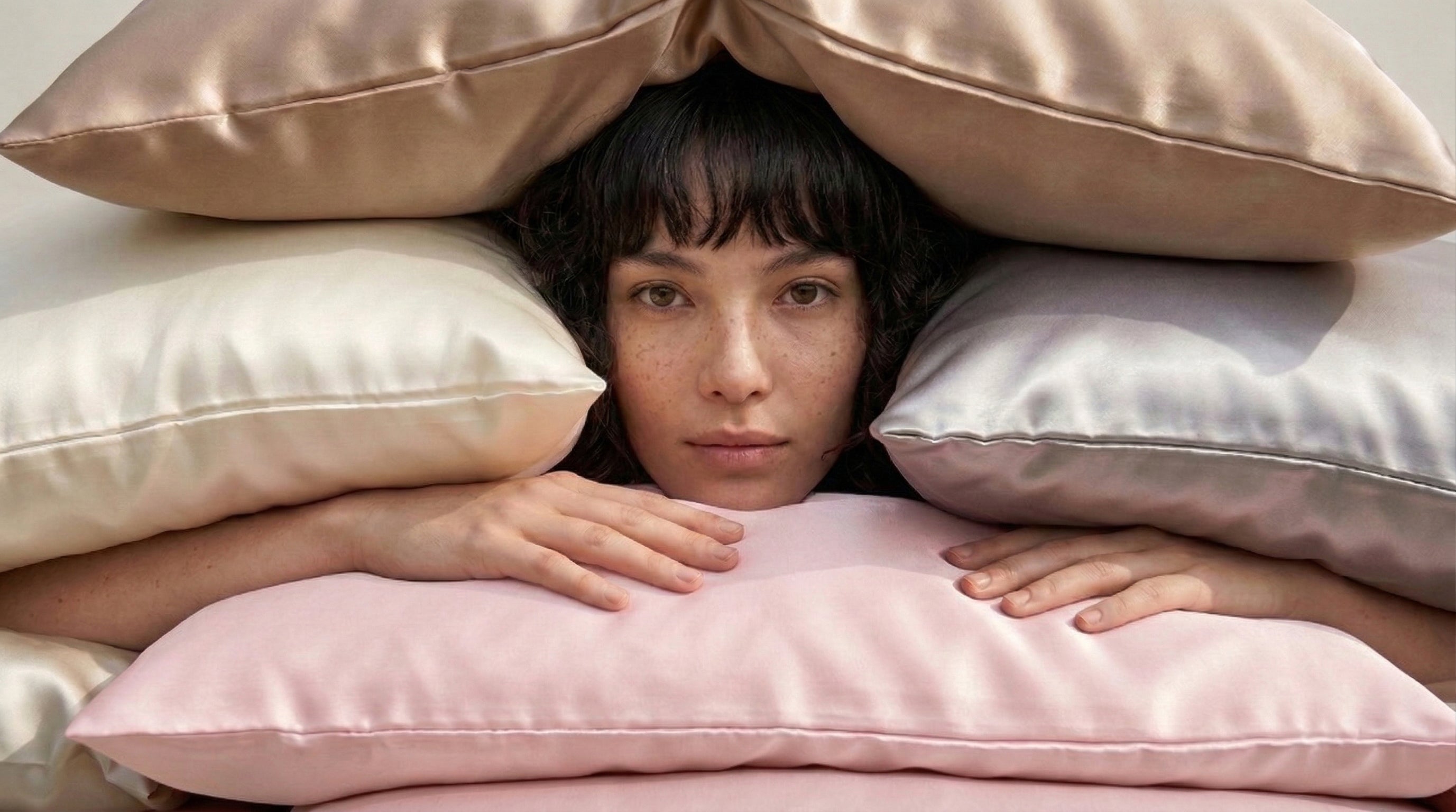
Dermatologists have long observed this. Smooth fabrics glide; rough ones tug. Sleep experts note that silk's smooth quality produces fewer wrinkles simply because it creates less friction against the skin. In plain terms: your face prefers a gentle glide to a harsh drag.
Silk pillowcases, by their nature, offer that slip. They let your skin rest against a surface that moves with you, not against you.
What Your Skin Experiences at Night
Your skin is elastic and supple, but it is not invulnerable. Each night, cotton pillowcases can tug at delicate facial cells. Dermatologists warn that repetitive pressure and friction from rough fabrics form sleep lines, folds that vanish by morning yet can imprint themselves with time. It is like ironing a crease into fine silk; eventually, the crease may hold.
Silk acts differently. Its fibers, smooth at a microscopic level, create a surface that slips past skin with almost no resistance. Laboratory measurements confirm what many have felt: silk dramatically reduces friction against hair and skin compared to cotton. Hair glides without tangling. Skin feels only the gentlest contact.
The Sleep Foundation notes that silk pillowcases cause fewer wrinkles simply because there is less grab on the skin. It is a small, nightly kindness, one that favours skin prone to fine lines or anyone who wakes with pillow-creased cheeks.

Why Moisture Matters While You Sleep
The difference between fabrics becomes even clearer when moisture enters the conversation. Cotton is porous and thirsty. It drinks water and skin oils through the night.
Sleep and skin experts explain that cotton's high absorbency means it can pull moisture, along with your carefully applied night creams, into its weave. What was meant to nourish your skin instead disappears into the fabric.
Silk drinks far less. Studies show that cotton absorbs significantly more water than silk, causing moisture to leave the skin and hair faster under a cotton pillowcase. On silk, you wake up with more of your skin's natural oils intact. Your hair feels smoother, not parched.
For dry or aging skin, this matters. Silk does not strip moisture away. Its protein structure retains hydration, unlike cotton's cellulose fibres that actively pull water from wherever they find it.
The Temperature Factor You Didn't Consider
Silk's gifts extend beyond glide and moisture. They reach into the realm of temperature. Unlike polyester blends or thick cotton, pure silk is thermoregulatory. It feels cool to the touch and adapts naturally, cool on a warm night, gently insulating on a cool one.
Bedding experts note that silk fibers help the body shed heat, wicking away sweat instead of trapping it against the skin. Many sleepers find that silk stops the midnight heat waves. It does not cling to the cheek or forehead when you toss and turn.
Silk helps keep the skin's surface at a steady equilibrium. No clammy flush. No nighttime irritations. Just rest, undisturbed.

A Quiet Signal to the Brain
Silk feels like a quiet lullaby for the skin. Its weight and texture matter subconsciously. Experts say the luxurious feel of silk creates a soothing and calming environment, promoting relaxation.
The simple habit of slipping between silk pillowcases can become a mindful ritual. The soft sheet against your cheek signals to the brain that it is time to let go. For a sensitive sleeper besieged by screens and noise, that gentle cue can reduce stress and quiet the mind.
Silk's smooth surface also means no scratchy disruptions. In the quiet of night, every sense counts.
What Silk Cannot Do
Silk is not a magic elixir. Silk pillowcases will not erase deep wrinkles overnight. They will not reverse decades of sun damage or transfer nutrients into your skin.
Science is clear: silk's benefits come from its physical properties, not mystical chemistry. It is not an acne cure or a substitute for healthy sleep habits. Silk can help protect moisture and reduce nightly tugging, but it cannot perform miracles.
It is a thoughtful addition to a broader self-care routine.

The Morning Difference
By morning, silk's subtleties reveal themselves in how your skin feels and how your hair behaves: quieter, smoother, more hydrated. These effects are small and gentle, but over time they accumulate.
Choosing silk is an invitation to a calmer, cooler night. It is not a flashy trend, just a quiet upgrade: a whisper of comfort that acknowledges your body's need for gentle care.
The beauty of silk is that it feels as good as it looks. And now we know that this feeling has honest, grounded benefits.