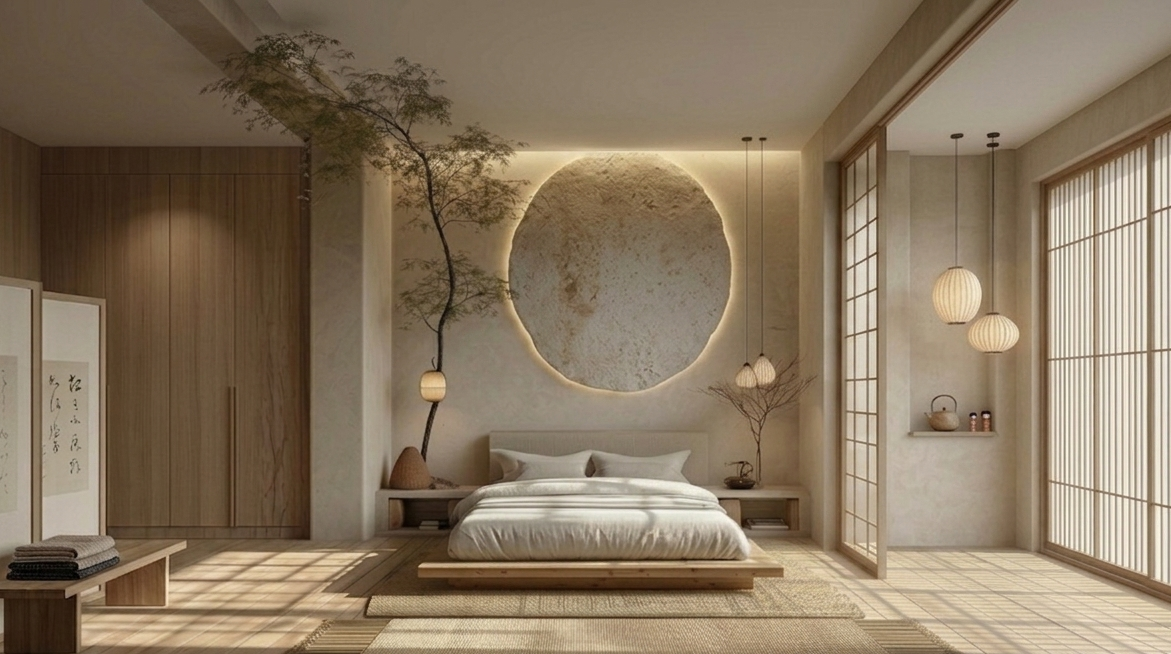
How NØRA Turns Japandi Design Philosophy Into Better Rest
In today's overstimulated world, finding true calm is a quiet revolution. We carry our phones to bed, face screens long after sundown, and let clutter accumulate in the spaces meant for rest. Sleep often feels like an escape from our own lives rather than a natural surrender.

Yet science reminds us that both mind and environment crave stillness. Our brains are not built for endless information; constant visual noise overwhelms us and can make rest elusive. This is where Japandi design offers something gently radical. With its soft edges and thoughtful restraint, Japandi suggests a different pace for the things that surround us, a pace that honours the quiet needs of the body at night.

Japandi Design: Simplicity, Nature, and Warmth
At its essence, Japandi marries Scandinavian minimalism with Japanese wabi-sabi elegance. It is the feeling of East meeting West: natural wood and cozy linen next to clean lines and uncluttered space. Both traditions prize simplicity, high-quality natural materials, and a connection to the outdoors. A Japandi home whispers in a palette of neutrals and earth tones. Sunlight on pale linen, mustard and olive in clay and wood, a single branch in a simple vase, all creating calm depth without clutter.

Both Japanese and Scandinavian design share an emotional quality: they teach us to find beauty in imperfection and quietness in simplicity. In practice, this means living with only what you truly love or need. Research on minimalism agrees: fewer visual distractions lead to a clearer mind. People who clear out excess in their rooms often report less anxiety and a greater sense of ease at bedtime. In a Japandi-inspired bedroom, every item has purpose. The calm space itself helps the mind let go.

Calm and Clarity: How Minimal Spaces Soothe the Mind
Our environment quietly shapes our moods. Studies show that messy spaces compete for our attention and literally tax the brain's processing power. Women who described their homes as cluttered were found to have higher cortisol levels throughout the day. By contrast, minimal interiors give our minds permission to slow down. As one psychological study puts it, fewer items create more "mental space," leading to a clearer, calmer mind.
That sense of ease matters at bedtime. Nestling into a bed surrounded by gentle order can feel like a welcome pause. Natural textures and muted colors signal safety to our nervous system. When your bedroom is uncluttered and warm, your brain stops scouring the room for chaos. You notice the weight of soft linen sheets, the faint scent of cotton in the air, the quiet hum of nighttime. Under such conditions, falling asleep comes easier.

The Restful Bedroom: Light, Texture, and Quiet
Light and material choices profoundly shape how ready we feel for sleep. Experts emphasize gentle, warm light as evening falls. Warm hues mimic a sunset and tell our bodies that night is coming. They encourage the release of melatonin, our natural sleep hormone. In contrast, bright blue or cool light from screens tricks the brain into wakefulness. A Japandi approach might swap harsh overhead lights for a dim amber lamp or an oil-paper lantern casting soft shadows.

The choice of fabrics and textures is equally important. Sleep specialists recommend natural, breathable fibers like cotton, linen, silk, or bamboo. Synthetic materials tend to trap heat and can disturb rest. Silk, in particular, feels cool and smooth on the skin, wicking moisture and keeping you comfortably cool even on warm nights. It is also naturally hypoallergenic, discouraging dust mites and irritants so you wake refreshed. Linen's textured softness adds warmth and earthiness; even a simple cotton throw can feel deeply comforting. Together, these natural textures gently remind your body to slow down.
Every detail, a linen curtain softly swaying, a bedside mug of warm tea, becomes part of the sensory lullaby of the night. The goal is a bedroom that feels like a soft blur of calm sensations: a quiet corner of the house where busy signals fade out.

Mindful Objects: The Comfort of Purposeful Design
Objects in this calm setting carry quiet meaning. Each piece is chosen not to impress, but to comfort. A simple wooden clock ticking slowly, a woven blanket folded just so, invite a certain gratitude. Psychologists find that when we live with fewer possessions, we feel more present and content. Minimalism encourages us to ask: Do I truly love this mug? Do these pajamas bring me ease? Every remaining item stands out. An oil-paper lamp glows simply because it can. A pair of slippers waits by the bed because it cradles your feet. The absence of clutter makes each small nightly habit feel meaningful.

Think about holding a well-crafted object in your hand, perhaps a silk eye mask resting over your eyes, or a throw woven from organic cotton draped across your lap. The simplicity of its form can feel soothing, as if the object itself is giving you permission to rest. In the subtle curve of a wooden chair or the whisper-quiet glide of silk pajamas, there is a sense of being cared for by design itself.
NØRA's Quiet Craft: Silk, Linen, and Thoughtful Design
At NØRA, we weave these principles into every pillow and pajama. Our bedding and sleepwear use fine silk fibers chosen for both beauty and science. Sleep experts recommend breathable, hypoallergenic fabrics for exactly these reasons. Silk sheets and eye masks feel cool and smooth on skin, preserving moisture and keeping temperature just right.

Everything we design is pared back, so that nothing fights for your attention. The result is a sensory experience of restfulness. The rustle of a silk duvet as you turn over, the faint scent of natural fibers washing away distractions, the weight of a well-made garment as you settle into bed. These are small, intentional luxuries that ease the day's tension. And if they sound simple, it is because they are. Simplicity itself can feel profound after a life of chasing more.

In the end, better sleep is less about gadgets and more about how you feel in your space. By blending the serenity of Japandi aesthetics with sensory empathy, NØRA is more than a label. It is a partner in rest. We design each piece with the reminder that your bedroom should feel like a sanctuary for your tired mind. When you slip into NØRA's silk sheets, we hope you feel the careful intention behind every stitch and fiber.
In a quieter room with softer textures, the mind can at last breathe.