


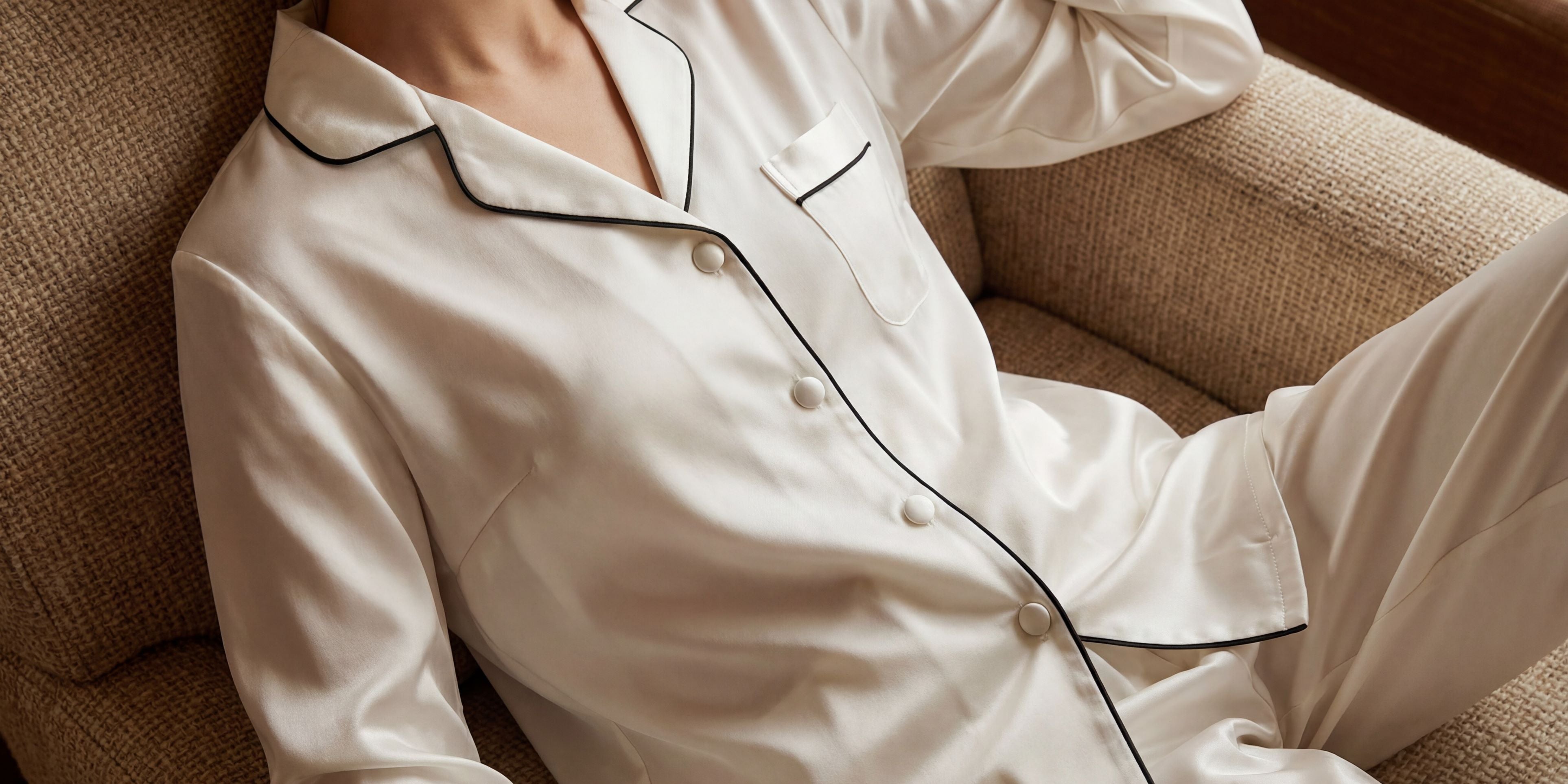
What Silk Sleepwear Does to Your Body and Mind
Nightfall can feel like a gentle invitation to let go. After a day of noise and overwhelm, the simple act of changing clothes becomes a ritual of release. Slipping into silk sleepwear is not just a wardrobe choice but a physical cue: the fabric's whisper-light touch across your skin signals the brain to unclench and settle into calm.
It is a quiet transformation, almost instinctive. The smooth caress of silk tells your nervous system that you are safe now, helping lower stress as you drift toward sleep.
Why Silk Feels Like a Second Skin
This fabric feels different on the skin because it literally glides. Mulberry silk is one of the smoothest fibers in nature. Its threads have a much lower friction coefficient than cotton, so as you move or shift in bed, the material slips freely instead of catching. Over a night, a cotton shirt might tug at delicate skin and frizz hair, but this gentle textile lets your body and hair move undisturbed.
The fabric also handles moisture with intelligence. Unlike absorbent cotton, which acts like a sponge for your skin's natural oils, silk helps retain hydration. The natural protein, sericin, holds water against your skin, reducing moisture loss through the night. Studies confirm that sleeping on such material keeps your face plumper and your hair smoother by morning.
Your carefully applied night creams and natural skin oils stay where they belong instead of disappearing into your pillow. By dawn, your complexion appears calmer and your hair less bedraggled, because the surface beneath you offered no rough fibers to steal moisture or create friction.
The Calming Effect You Can Feel
Silk's gift is not only tactile but also deeply psychological. Researchers note that gentle, soft textures cue our brains to switch from alertness to calm. Slipping into silk pajamas is like pressing the brakes on a racing mind, offering a sensory signal that it is time to unwind.
Sleep studies report that people who wore smooth, natural fabrics felt significantly less stress than those who slept in rough synthetics. The simple change to a softer texture has a measurable effect on how we feel. Softness even nudges our hormones, encouraging the release of serotonin and oxytocin, the body's own trust and tranquility chemicals.
This literally tells your system that you are safe. At the same time, the absence of irritation helps cortisol, the stress hormone, recede. Wearing such sleepwear becomes a gentle act of self-care, signaling to your deepest senses that it is time to breathe easy and let go of the day's weight.
The Science of Staying Cool
Comfort at night depends on staying in that Goldilocks zone, not too hot, not too cold. Silk has a natural advantage here. Its fibers are tiny and hollow, creating air pockets that insulate without trapping heat. The fabric's thermal conductivity is low, meaning it does not strip away body heat too quickly.
In practice, this material feels cool and breathable on a warm night yet still provides a light warmth when the room is chilly. Your body's excess heat dissipates more readily through such cloth than through a polyester blend. Moisture management is equally important. Silk can absorb about 30 percent of its weight in humidity before feeling damp.
Night sweat is wicked into the fabric and evaporated, keeping your skin dry. Cotton, by comparison, turns clammy, while polyester lets sweat bead up against you. This creates a steadier microclimate, preventing midnight wake-ups and allowing your body to truly relax instead of constantly adjusting.
Silk Versus Cotton, Linen, and Synthetics
Every fabric has its season, but silk stands apart. Cotton sleepwear is soft and familiar, yet it does not slide like this material. Cotton absorbs sweat effectively, but then holds it, which can feel chilly or sticky as you cool down. Linen is wonderfully breathable in summer, but its texture is inherently crisp.
Silk, by contrast, is naturally wicking and temperate all year round. What about synthetics? Many pajamas labeled satin are actually polyester. They look shiny but betray comfort. Synthetic fibers trap heat and generate static, feeling sticky and muggy against the skin on warm nights.
Polyester absorbs virtually no moisture, so sweat just clings to you. A genuine silk garment stays cool and flowing, while its synthetic imitation quickly feels hot and electric. This fabric lets your body breathe; synthetics keep you alert, and not in a good way.
Why Silk Sleepwear Is Quiet Luxury
Silk sleepwear is luxury of a different kind, the quiet one. It does not shout logos or status. It whispers quality and care. Choosing such sleepwear is a deeply personal statement. It says that you matter enough to gift yourself gentleness.
Psychologists call this enclothed cognition, the idea that what we wear can shape how we feel. Draping yourself in this smooth textile subtly reinforces self-worth and safety. After a hard day, wrapping in a silk robe feels like being hugged by a trusted presence.
It signals that tonight, you are tended to. There is strength in that softness. You are not surrendering power; you are choosing to refuel in a peaceful state. This sleepwear becomes a form of gentle armour, protecting you with ease rather than rigidity, reminding you that rest is not a luxury but a necessity.
How to Choose Silk Sleepwear That Lasts
If this fabric feels almost magical, choosing the right kind need not be mystifying. Look for 100 percent mulberry silk, which comes from silkworms raised on a mulberry-leaf diet. This yields long, even fibers prized for their smooth, lustrous surface and durability. Other silks exist, but mulberry is generally the finest for sleepwear.
Pay attention to momme weight, which measures density. For sleepwear, fabrics typically range from 19 to 25 momme. Nineteen momme is light and airy, ideal for hot sleepers or summer. Twenty-two momme is soft yet long-lasting, while twenty-five momme is thick and drapey, a true indulgence for cooler nights.
Most silk sleepwear uses a charmeuse or satin weave to maximize that silky hand. Choose cuts that let air circulate, loose shirts, roomy pants, or wrap-style robes. When you touch pure silk, it should feel naturally cool. If it feels sticky or plastic, it may be a synthetic blend. Look for tight, even stitching as a mark of quality.
Embracing the Silk Experience
There is no single sleep hack to cure insomnia, but this sleepwear can be a real part of the solution. It quietly lowers sensory noise at night, nudges your physiology toward rest, and tells your mind that the day is done. For an overstimulated spirit, it offers a nightly breather.
In the end, what this fabric provides is gentleness. It is a reminder that rest is not a race but a surrender. Sometimes the softest touch is the strongest invitation to let go. By choosing thoughtfully the right type, weight, and fit, you invite a little more calm into each night.
In the soft darkness with this smooth textile against your skin, you might just find the quiet your heart has been asking for. The experience is not about perfection; it is about creating a space where rest feels not only possible but natural.


